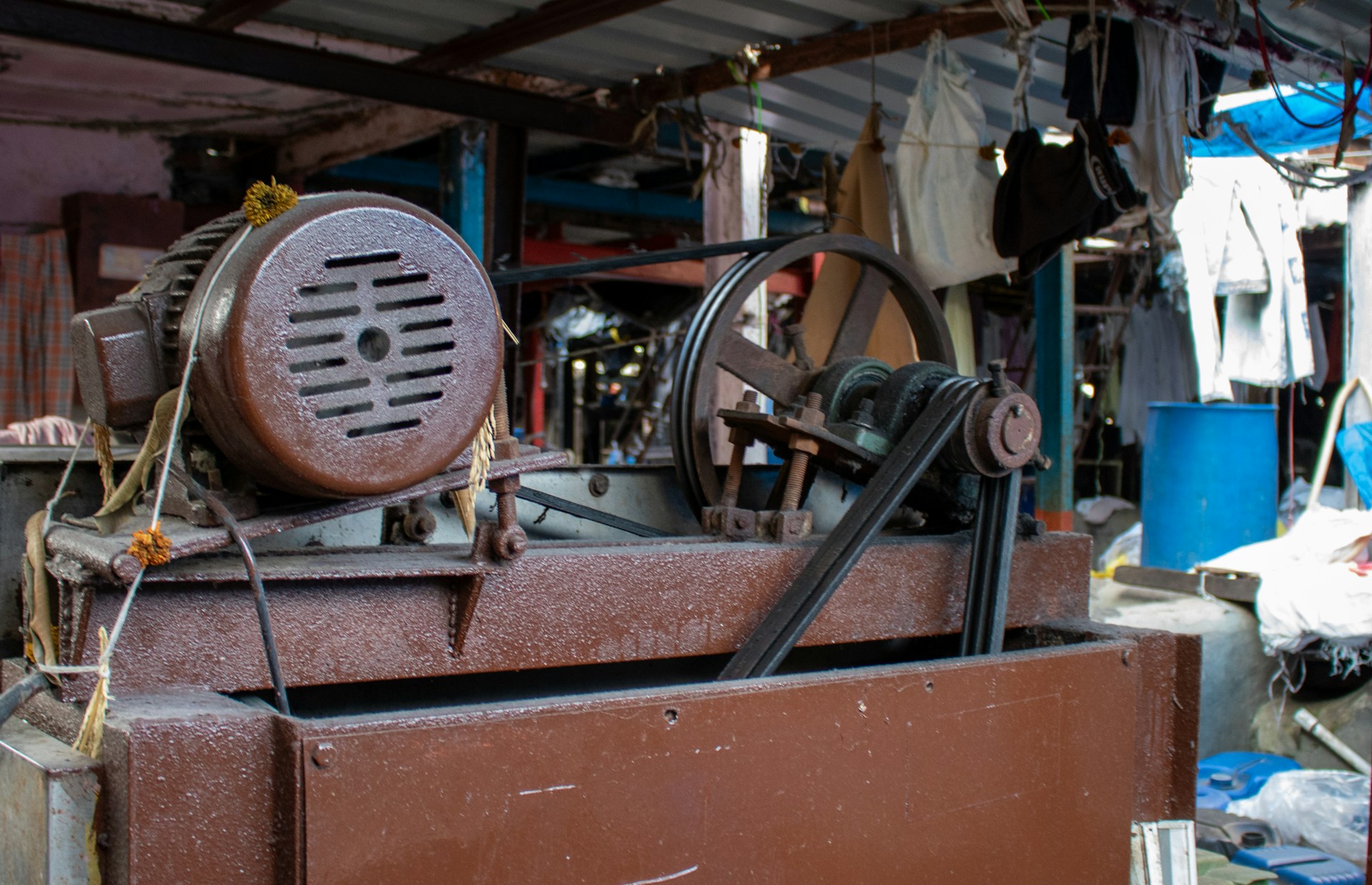
Gear ratios are fundamental to mechanical power transmission. Whether you're designing a gearbox, selecting a gear reducer, or troubleshooting a drive system, understanding how to calculate and apply gear ratios is essential. This guide covers the basics and practical applications.
What Is Gear Ratio?
Gear ratio is the relationship between the number of teeth on two meshing gears or, equivalently, the ratio of their rotational speeds. It determines how speed and torque are traded between input and output.
Gear Ratio = Driven Teeth / Driver Teeth = Input Speed / Output Speed
A ratio greater than 1:1 reduces speed and increases torque. A ratio less than 1:1 (overdrive) increases speed and reduces torque.
Basic Gear Ratio Examples
Simple Two-Gear System
If a 20-tooth driver meshes with a 60-tooth driven gear:
Ratio = 60 / 20 = 3:1
This means:
- Output speed is 1/3 of input speed
- Output torque is 3× input torque (minus friction losses)
- Output rotates opposite direction from input
Compound Gear Train
When multiple gear pairs are connected in series, multiply the individual ratios:
Total Ratio = Ratio₁ × Ratio₂ × Ratio₃...
A two-stage reducer with 3:1 and 4:1 stages gives:
Total = 3 × 4 = 12:1
Calculate Gear Ratios Instantly
Enter tooth counts to get speed reduction, torque multiplication, and output RPM for any gear train.
Speed and Torque Relationship
Power is conserved through a gear train (minus efficiency losses):
Power = Torque × Speed
So if you reduce speed by 3:1, torque increases by approximately 3:1. The actual torque gain is slightly less due to friction, typically 2-5% loss per gear stage.
| Ratio | Input 1000 RPM | Output Speed | Torque Multiplication |
|---|---|---|---|
| 3:1 | 1000 RPM | 333 RPM | ~2.85× |
| 5:1 | 1000 RPM | 200 RPM | ~4.75× |
| 10:1 | 1000 RPM | 100 RPM | ~9.5× |
| 30:1 | 1000 RPM | 33 RPM | ~28× |
(Assuming 95% efficiency per stage)
Types of Gear Reducers
Parallel Shaft (Helical/Spur)
- Ratios from 1:1 to about 7:1 per stage
- High efficiency (95-98% per stage)
- Compact for moderate ratios
Right Angle (Bevel/Worm)
- Worm reducers: 5:1 to 100:1 single stage
- Worm efficiency: 50-90% depending on ratio
- Self-locking at high ratios (safety feature)
Planetary (Epicyclic)
- 3:1 to 10:1 per stage
- Very compact, coaxial input/output
- High torque capacity for size
- 97% efficiency typical
Selecting the Right Ratio
To determine what ratio you need:
Required Ratio = Motor Speed / Desired Output Speed
For a 1750 RPM motor driving a conveyor at 35 RPM:
Ratio = 1750 / 35 = 50:1
Consider Service Factor
Always select a reducer with higher torque capacity than your calculated load. Service factors account for:
- 1.0: Uniform load, 8-hour duty
- 1.25: Moderate shock or 16-hour duty
- 1.5: Heavy shock or continuous duty
- 1.75+: Severe shock loads
Common Applications
Conveyors
Typical ratios: 20:1 to 60:1. High torque at low speed for heavy loads.
Mixers and Agitators
Typical ratios: 10:1 to 30:1. Variable speed drives often paired with gear reducers.
Hoists and Cranes
Typical ratios: 30:1 to 100:1. Often use worm drives for self-locking safety.
Machine Tool Spindles
Typical ratios: 2:1 to 6:1. Speed-increasing (overdrive) applications common.
Troubleshooting Gear Systems
- Output speed wrong: Verify actual tooth counts; catalog numbers don't always match actual ratio
- Excessive heat: Overloaded, insufficient lubrication, or wrong oil viscosity
- Noise: Worn gears, misalignment, or inadequate backlash
- Low torque output: Check for slipping, worn gears, or incorrect ratio selection
Understanding gear ratios helps you specify the right components, diagnose problems, and optimize power transmission systems. When in doubt, consult reducer manufacturers' selection guides—they account for application-specific factors that simple ratio calculations can't capture.