Welding symbols on engineering drawings communicate joint requirements clearly and consistently. Understanding these symbols is essential for fabricators, welders, and inspectors. This guide covers the most common symbols and how to interpret them.
The Reference Line
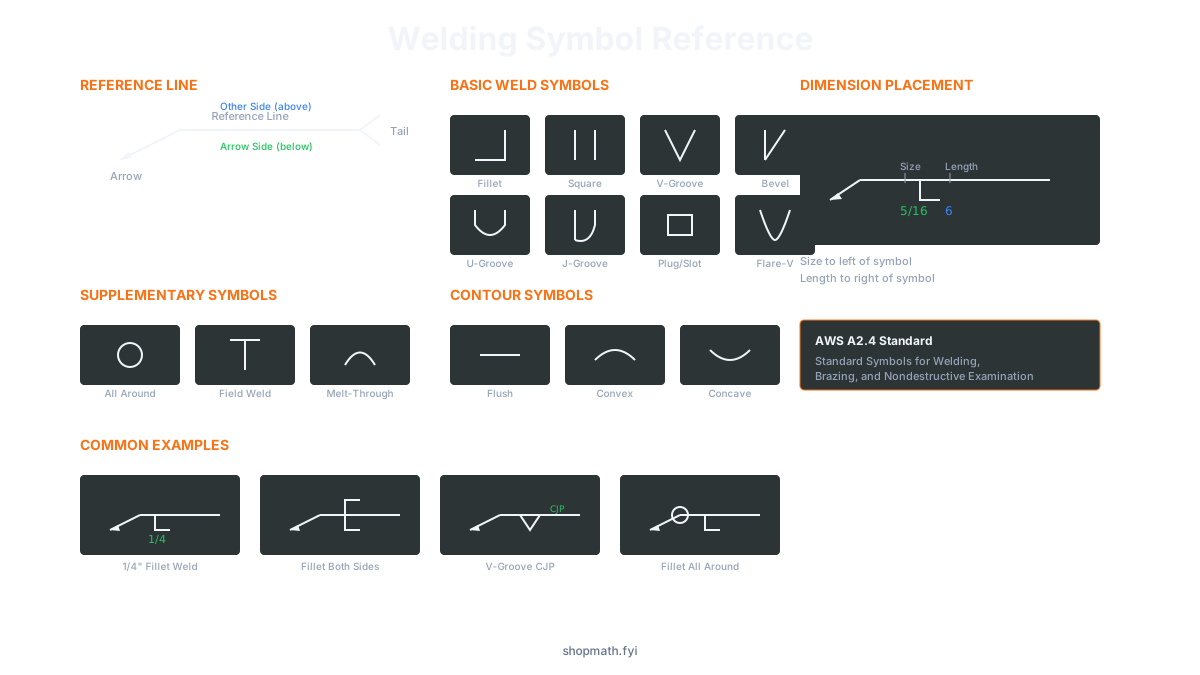
Every welding symbol is built around a horizontal reference line with an arrow pointing to the joint:
- Arrow: Points to the joint to be welded
- Reference line: Horizontal line where weld symbols attach
- Tail: Optional, contains specifications or notes
Arrow Side vs. Other Side
This is the most important concept:
- Symbol below the reference line: Weld on the arrow side (side the arrow points to)
- Symbol above the reference line: Weld on the other side (opposite from arrow)
- Symbols on both sides: Weld both sides
Think of it as: "below the line = near side, above the line = far side."
Basic Weld Symbols
Fillet Weld
A right triangle shape. The most common weld symbol. Numbers indicate:
- Left of symbol: Leg size (e.g., 1/4)
- Right of symbol: Length (if not continuous)
- Inside triangle: Weld all around or field weld symbols
Groove Welds
- Square groove: Two parallel vertical lines
- V-groove: V shape, number indicates included angle
- Bevel groove: One vertical, one angled line (arrow points to beveled member)
- U-groove: U shape for thick material with radiused bottom
- J-groove: J shape (one-sided U)
Groove depth and root opening are shown in parentheses or as dimensions.
Fillet Weld Dimensions
Groove Weld Dimensions
For a groove weld symbol:
- Depth of bevel: Number to left of symbol (in parentheses = groove depth only)
- Root opening: Number inside the symbol
- Groove angle: Number outside the symbol
- Weld size: Number in parentheses to left (if different from groove depth)
Supplementary Symbols
Contour
- Flat line: Flush/flat contour
- Convex arc: Convex contour
- Concave arc: Concave contour
Finish Method
Letters indicate how contour is achieved:
- G: Grinding
- M: Machining
- C: Chipping
- H: Hammering
Special Symbols
- Circle at arrow/line junction: Weld all around (the joint)
- Flag at junction: Field weld (not in shop)
- Filled circle: Melt-through (complete penetration from one side)
Common Examples
1/4" Fillet, Arrow Side
Triangle below line with "1/4" to the left. Weld a 1/4" fillet on the side the arrow points to.
3/8" Fillet Both Sides
Triangles both above and below line with "3/8" on each. Weld both sides with 3/8" leg.
Full Penetration V-Groove
V symbol with "CJP" (Complete Joint Penetration) in the tail. Root opening and angle dimensioned.
The Tail
When present, the tail contains:
- Welding process (GMAW, FCAW, etc.)
- Electrode/filler specification (E70S-6)
- Reference to WPS number
- NDT requirements (UT, RT)
- Other specifications or notes
If no tail is shown, general notes or shop standards apply.
Staggered Intermittent Welds
When welds aren't continuous:
- Length and pitch shown to right of symbol (e.g., 2-6 = 2" weld, 6" center-to-center)
- Staggered welds: symbols offset above and below reference line
- Chain intermittent: symbols aligned but welds alternate
Reading Tips
- Start with the arrow—what joint does it indicate?
- Check above and below the line for arrow side vs. other side
- Look for dimensions (size, length, spacing)
- Check for supplementary symbols (all around, field, contour)
- Read the tail for process and specifications
Common Mistakes
- Confusing arrow side/other side: Below line = arrow side
- Ignoring root opening: The number inside the groove symbol
- Missing all-around symbol: Circular symbol means weld entire perimeter
- Skipping the tail: Contains critical process information
Welding symbols are a universal language. Master the basics—reference line orientation, arrow/other side, and common weld types—and you can interpret most drawings. AWS A2.4 is the full standard reference when you need details.