Each welding process has strengths and limitations. Choosing the right one depends on material, joint access, appearance requirements, and production volume. This guide compares MIG, TIG, and Stick welding to help you select the best process for your application.
Process Overview
MIG (GMAW - Gas Metal Arc Welding)
A continuously fed wire electrode melts into the weld pool while shielding gas protects from contamination.
- Shielding: External gas (typically 75% Ar/25% CO₂ for steel)
- Electrode: Consumable wire spool
- Polarity: DCEP (DC+)
TIG (GTAW - Gas Tungsten Arc Welding)
A non-consumable tungsten electrode creates the arc while filler rod is added separately by hand.
- Shielding: Pure argon (or Ar/He mix)
- Electrode: Non-consumable tungsten
- Polarity: DCEN (DC-) for steel/stainless, AC for aluminum
Stick (SMAW - Shielded Metal Arc Welding)
A flux-coated consumable electrode creates the arc and provides its own shielding as the flux melts.
- Shielding: From electrode coating (no external gas)
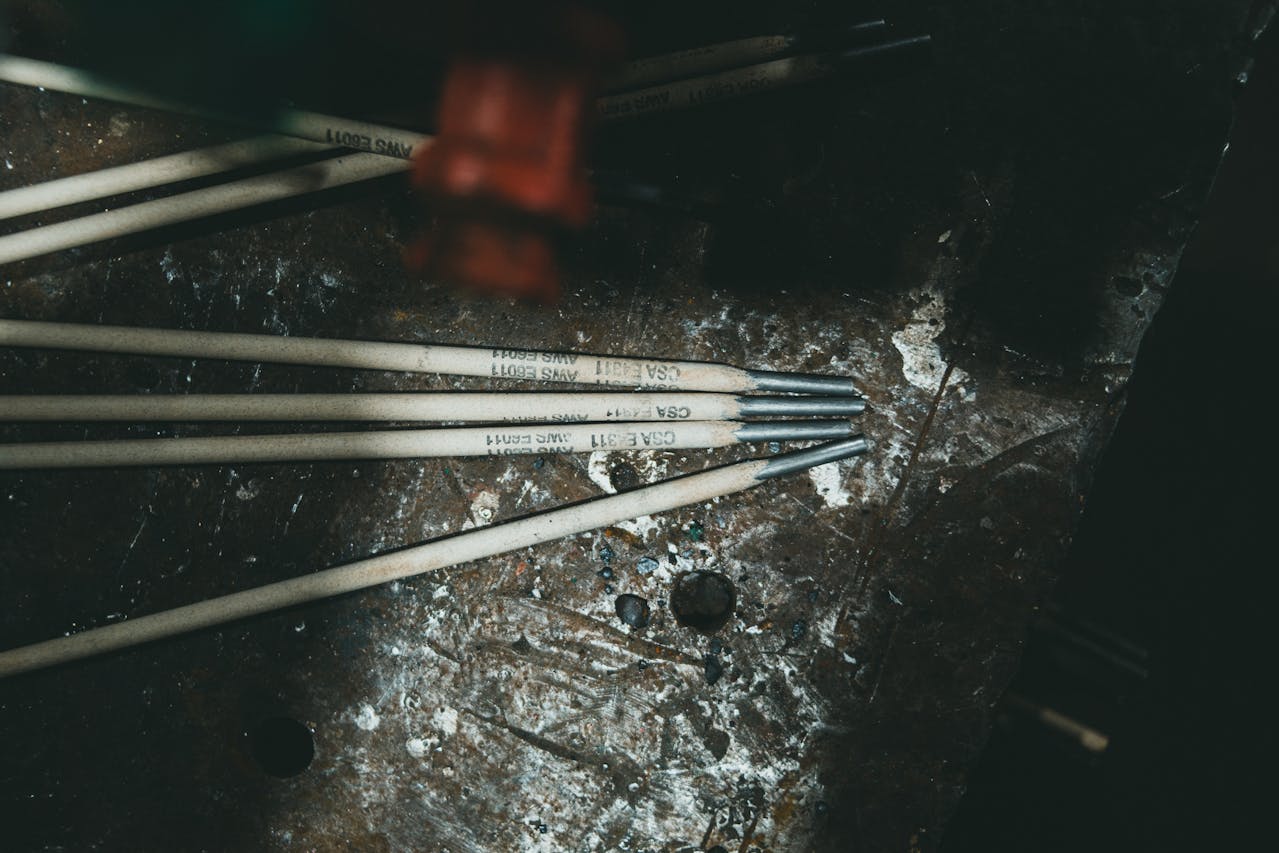
- Electrode: Consumable rod (6010, 7018, etc.)
- Polarity: Varies by electrode type
Comparison Table
| Factor | MIG | TIG | Stick |
|---|---|---|---|
| Learning curve | Easy | Difficult | Moderate |
| Travel speed | Fast | Slow | Moderate |
| Weld appearance | Good | Excellent | Fair |
| Thin material | Good | Excellent | Poor |
| Thick material | Good | Slow | Excellent |
| Outdoors/wind | Poor | Poor | Excellent |
| Dirty/rusty metal | Fair | Poor | Excellent |
| Equipment cost | Moderate | Higher | Lowest |
| Operating cost | Lowest | Moderate | Higher |
When to Use MIG
- Production work requiring speed
- Long continuous welds
- Sheet metal to moderate thickness
- Operators with less experience
- Materials: steel, stainless, aluminum (with spool gun)
Limitations: Needs shielding gas (not for windy conditions), wire feeding can be problematic with aluminum.
When to Use TIG
- Critical or visible welds where appearance matters
- Thin materials where burn-through is a concern
- Aluminum and stainless steel
- Exotic metals (titanium, chromoly, inconel)
- Root passes on pipe
Limitations: Slow, requires high skill, not practical for heavy fabrication or field work.
When to Use Stick
- Outdoor/field work in wind or weather
- Dirty, rusty, or painted surfaces
- Heavy plate and structural work
- Remote locations without power for wire feeders
- Pipeline and construction applications
Limitations: Slag removal required, not suitable for thin materials, slower than MIG.
Material Considerations
Carbon Steel
All three processes work well. MIG for production, Stick for field work, TIG for precision or thin gauge.
Stainless Steel
TIG preferred for appearance and avoiding contamination. MIG acceptable for production. Stick possible but requires proper electrodes and technique.
Aluminum
TIG is the standard for quality work. MIG with spool gun for production. Stick is rarely used.
Chromoly/Exotic Alloys
TIG almost exclusively. Precise heat control and inert shielding are critical for metallurgical properties.
Cost Analysis
Equipment Investment
- Stick: $300-1,500 for capable machines
- MIG: $500-3,000 for quality units
- TIG: $1,000-5,000+ for full capability
Consumable Costs
- MIG: Wire + gas, but high deposition efficiency (95%+)
- TIG: Filler rod + gas + tungsten, lower deposition rate
- Stick: Electrodes only (no gas), but 60-70% deposition efficiency
Making Your Choice
Consider these questions:
- What materials will you weld most often?
- Is appearance critical or will welds be hidden?
- Indoor controlled environment or outdoor field work?
- Production speed requirements?
- Operator skill level available?
Many shops have all three processes available and select based on the specific job. If you're starting out, MIG is the most versatile for general fabrication, while Stick is essential for field and repair work.