Selecting the right welding electrode affects weld quality, ease of use, and mechanical properties. This guide covers common SMAW (stick) electrodes, their characteristics, and when to use each type.
Understanding Electrode Classification
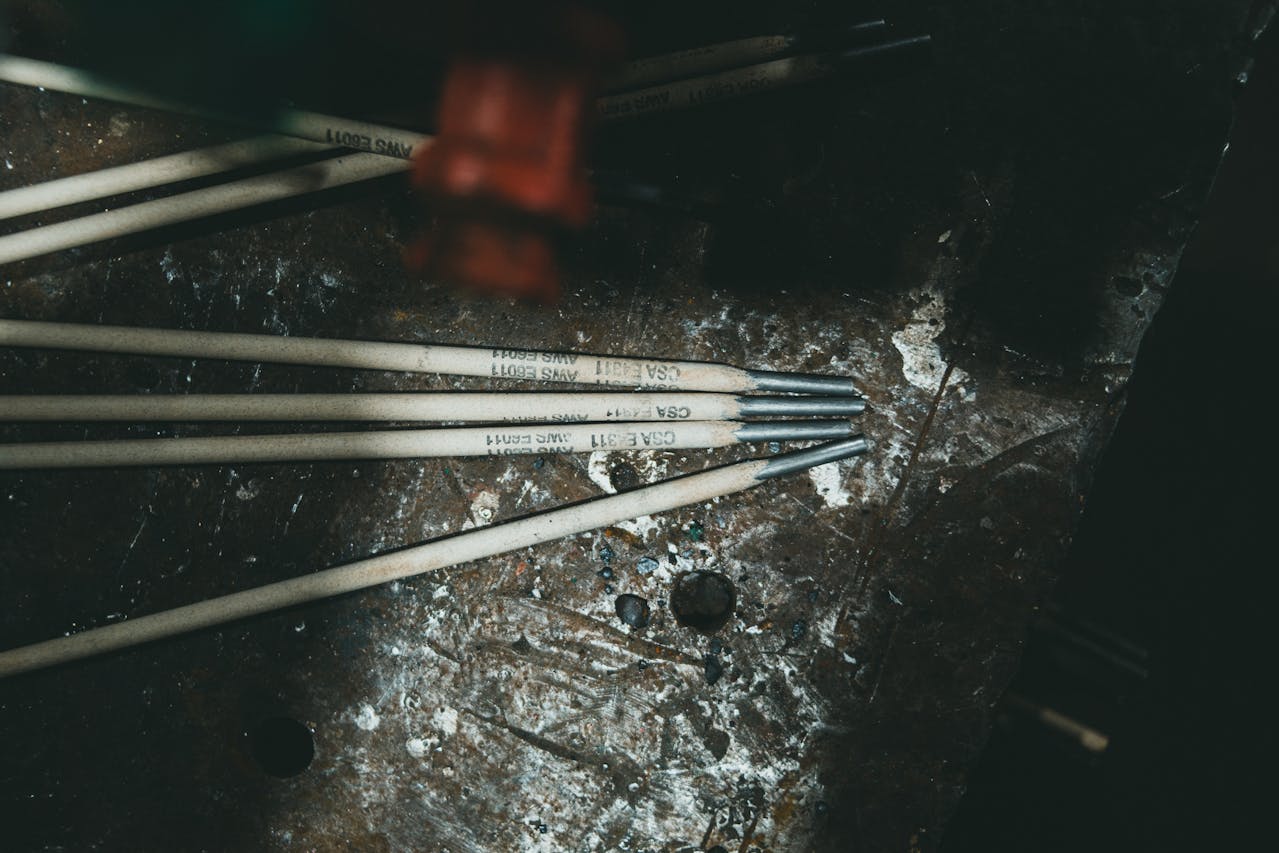
AWS electrode numbers (like E6010) tell you key properties:
- E = Electrode
- 60 = Tensile strength (60,000 psi minimum)
- 1 = All position (1 = all, 2 = flat/horizontal only)
- 0 = Coating type and current (see below)
Common Electrode Types
E6010 (Deep Penetration)
- Coating: Cellulosic (high-cellulose sodium)
- Current: DCEP only
- Best for: Root passes, pipe welding, dirty/rusty metal
- Characteristics: Deep penetration, fast freeze, spray arc
- Drawback: More spatter, rougher bead appearance
E6011 (Versatile)
- Coating: Cellulosic (high-cellulose potassium)
- Current: AC or DCEP
- Best for: Same as 6010 when AC only available
- Characteristics: Good penetration, works on AC machines
- Drawback: Slightly less penetration than 6010
Calculate Electrode Requirements
Estimate how many pounds of electrodes you need for your welding job.
E6013 (Easy to Use)
- Coating: Rutile (high titania potassium)
- Current: AC, DCEP, or DCEN
- Best for: Sheet metal, light structural, beginners
- Characteristics: Easy arc start, smooth arc, good appearance
- Drawback: Shallow penetration, not for critical welds
E7018 (High Quality)
- Coating: Low hydrogen (iron powder)
- Current: AC or DCEP
- Best for: Structural steel, pressure vessels, critical applications
- Characteristics: Strong, ductile welds, excellent mechanical properties
- Drawback: Must be kept dry, less forgiving
E7024 (High Deposition)
- Coating: Iron powder (high titania)
- Current: AC, DCEP, or DCEN
- Best for: Flat and horizontal fillets, production work
- Characteristics: High deposition rate, smooth bead
- Drawback: Limited to flat/horizontal positions
Quick Selection Guide
| Application | Electrode |
|---|---|
| Pipe root pass | E6010 |
| General repair, dirty steel | E6011 |
| Sheet metal, light duty | E6013 |
| Structural, critical | E7018 |
| High-speed flat welds | E7024 |
| Cast iron | ENi-CI (nickel) |
| Stainless to carbon | E309L |
Low Hydrogen Electrode Care
E7018 and other low-hydrogen electrodes absorb moisture. Moisture causes hydrogen cracking in welds:
- Store in sealed containers or rod ovens
- Rod oven temp: 250-300°F for storage, 700°F for reconditioning
- Max exposure time at room humidity: 4-9 hours depending on spec
- Don't recondition more than once (AWS limit)
Amperage Selection
Rule of thumb: 1 amp per 0.001" of electrode diameter:
- 3/32" (0.0938"): 60-90 amps
- 1/8" (0.125"): 90-140 amps
- 5/32" (0.156"): 120-180 amps
- 3/16" (0.1875"): 150-225 amps
Adjust based on position (lower for vertical/overhead) and joint type.
Common Mistakes
- Using 7018 on dirty metal: Low-H electrodes don't handle contamination well
- Wrong polarity: Some electrodes only work on DC+; check specifications
- Wet electrodes: Causes porosity and potential cracking
- Wrong size for position: Larger electrodes are harder to control overhead
The right electrode makes welding easier and produces better results. When in doubt, E6011 handles most situations, and E7018 is the standard for quality structural work when properly stored.